Taking Care with Anne Lindyberg — a free live conversation Mondays at 6:00pm Central Time on YouTube.
See Monday's Show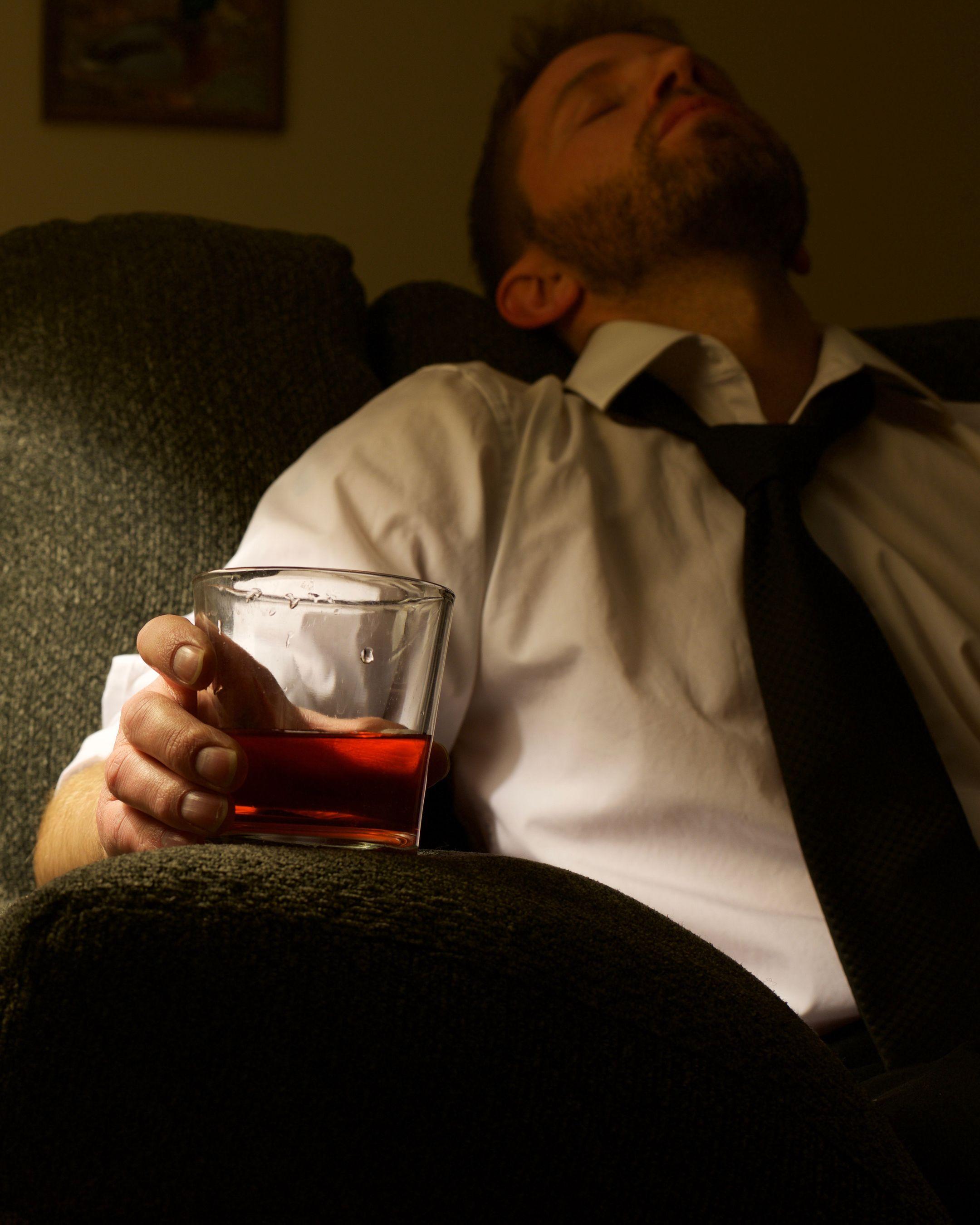
When the Day Is Over | Part 2
Someone asks what you want to do this evening. You consider a walk, a movie, dinner with a friend. Each sounds like more effort than pleasure.
A drink sounds good.
That experience does not, by itself, tell you anything definite about your drinking or your mental health. Perhaps you simply enjoy a drink. But if things you once liked have begun to feel oddly unrewarding, it is worth paying attention to the larger change.
Part 1 of this series asked what happens when anxiety follows you out of work. Depression can make the evening difficult in another way. You may finally have time for yourself and find that you do not particularly want anything you could do with it.
Depression is sometimes described as sadness, but sadness is only part of the picture. For some people, a more striking change is a loss of interest or pleasure. Researchers call this anhedonia. A 2025 review of anhedonia in depression describes how varied that experience can be.
You may still go to work. You may still laugh at someone’s joke. You may even have a pleasant afternoon. Yet the things that usually draw you toward life seem to have lost some of their pull.
This can be difficult to explain, especially if your life looks good from the outside. You might keep suggesting activities to yourself, then wonder why none of them appeals. You might mistake the problem for laziness.
A drink, meanwhile, is familiar. It asks very little of you. You know what to pour, where to sit, and roughly what to expect.
There is a difference between wanting the taste of a drink and wanting it to change the evening. Both may be true at once.
Perhaps you hope to feel a little lighter. Perhaps you want something to look forward to at the end of a day that felt flat. Perhaps making a drink is one of the few small acts that still feels enjoyable.
You need not argue yourself out of those answers. They tell you something about what is missing. In a longitudinal study of young adults, months with more depressive symptoms were associated with heavier drinking among those who drank, and drinking to cope helped explain that association. That finding does not mean the same thing happens to everyone. It does make the reason for drinking worth asking about.
You might notice, too, what happens afterward. Did you enjoy the drink and move on with your evening? Or did the evening still feel empty, with the drink becoming the one thing you wanted more of?
It would be easy to turn this into a list of better things to do after work. Call a friend. Take a bath. Go for a walk.
Any of those might be lovely. They may also sound unbearable to someone who is depressed. When pleasure has gone quiet, being told to pursue more of it can feel like being handed another chore.
The more useful question is what has changed for you. When did ordinary pleasures begin to lose their appeal? Is your mood different most days? Are you withdrawing from people or activities you still care about? Are you drinking in a way that worries you?
You do not have to decide alone which concern came first.
Depression and alcohol use can influence one another, but the relationship is not simple. A study of mood symptoms, coping motives, and alcohol-related consequences found an association at the same point in time, while its proposed pathway did not hold up in the study’s longer-term analysis.That is a useful caution against telling one neat story about every person who drinks when feeling low.
Your own pattern deserves more attention than a neat story. A drink may be an ordinary pleasure. It may be an attempt to get through an evening. It may be both.
If little else sounds good lately, depression is worth discussing with a qualified professional. If drinking is becoming difficult to limit or is causing harm, that deserves a direct assessment as well. There is room to take both seriously.
Part 1: Is It Anxiety That Makes Me Want a Drink After Work?
Part 2: Why Does a Drink Sound Good When Nothing Else Does?
Part 3: Why Is It So Hard to Unwind Without a Drink?
Anne Lindyberg, LMHC (Iowa), LCPC (Illinois), integrates the experiential therapy of Virginia Satir with Deep Brain Reorienting (DBR) and the Alexander Technique. She specializes in helping adults with complex and developmental trauma create lasting emotional change through therapy. She addresses substance use when it occurs alongside another mental health concern; she does not provide stand-alone substance use treatment.
This article and other informational content on this website are provided for educational purposes only. They are not a substitute for individualized professional care, do not constitute advice specific to your circumstances, and do not establish a therapist-client relationship.
This work is created on the traditional and unceded lands of Indigenous peoples; a fuller acknowledgment of the land, its history, and its peoples is available on this website.
“The Characteristics of Anhedonia in Depression: A Review From a Clinically Oriented Perspective.” 2025. https://pubmed.ncbi.nlm.nih.gov/40118858/
“Depressive Symptoms and Substance Use: Longitudinal Examination of Alcohol and Cannabis Coping Mechanisms in Young Adults.” 2025. https://pubmed.ncbi.nlm.nih.gov/41057711/
“Internalizing Symptoms, Negative Urgency, and Coping Motives: Potential Pathways to Alcohol Consequences.” 2025. https://pubmed.ncbi.nlm.nih.gov/39404831/

 Midwest Center for Transformational Change PLC